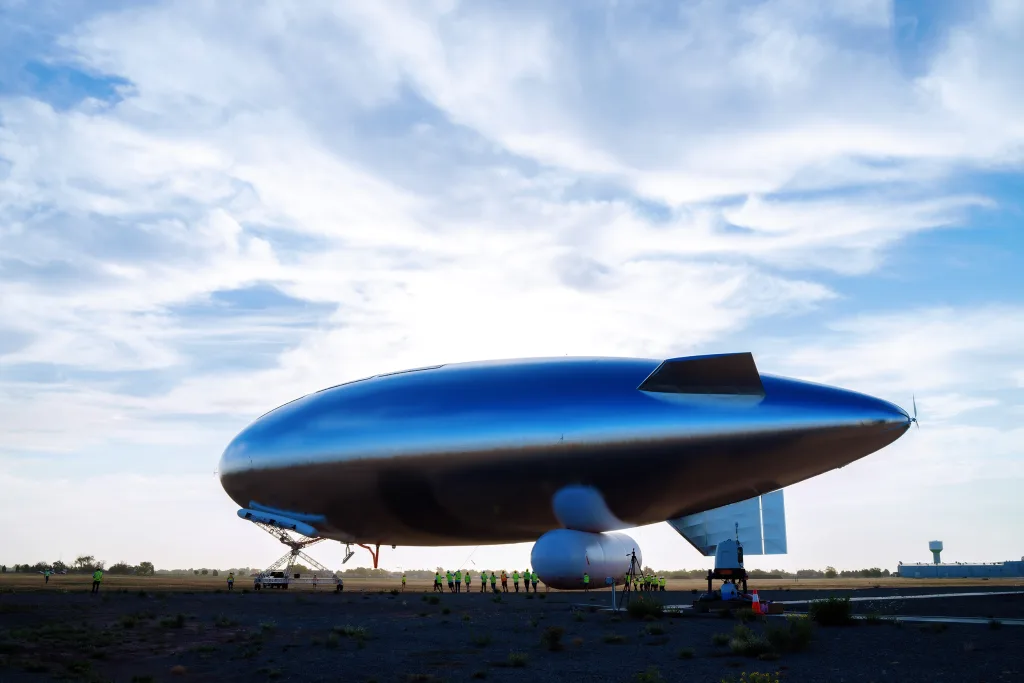
Sceye and Softbank: Inside The Haps Alliance For Japan
1. This Partnership Is About More than just Connectivity
Two businesses with different backgrounds that are based in New Mexico — a stratospheric aviation company and one of Japan's most prestigious telecoms conglomerates — agree in building a national network of high-altitude platform stations this is more than broadband. It is clear that the Sceye SoftBank partnership represents a legitimate bet on the stratospheric system that will become a permanent revenue-generating component of a national network for telecommunicationsthis is not a pilot scheme or a demonstration in principle but rather the beginning of a full-scale commercial rollout with a defined timeline as well as a large-scale plan for the country.
2. SoftBank has a rationale to back Non-Terrestrial Networks
This interest of SoftBank's in HAPS did not spring up out of thin air. Japan's geography – thousands of islands, mountainous terrain and coastal areas regularly struck by earthquakes and typhoons causes persistent areas of coverage that ground infrastructure alone can't close economically. Satellite connectivity is beneficial, however delay and cost are still the primary aspects for mass-market applications. The stratospheric layer, which is located at 20 kilometres, holding position above specific regions and delivering low-latency broadband services to conventional equipment, solves a lot problems at the same time. For SoftBank, investing on stratospheric-based platforms is a natural extension of a strategy already in place to diversify the network beyond terrestrial dependency.
3. Pre-Commercial & Commercial Services to be Designed for Japan in 2026 signal real Momentum
The main point that distinguishes this alliance from previous HAPS announcements is the goal of commercializing pre-commercial services in Japan starting in 2026. This isn't a vague, future obligation, but rather a particular operational milestone, with infrastructure, regulatory, and commercial implications attached to it. When they reach precommercial status, the platforms must be able to perform station keeping in a reliable manner, delivering good quality signals and being able to communicate with SoftBank's established network structure. The timing at which this date was been publicly committed to suggests both parties have mastered the foundational and technical requirements to make it a legitimate target rather than an aspirational marketing strategy.
4. Sceye provides endurance and payload Capacity That Other Platforms Struggle to match
Not all HAPS vehicle can function as a nationwide commercial network. Fixed-wing solar aircraft typically trade payload capacity for an altitude-based performance, which limits the amount telecommunications equipment they can carry. Sceye's airship design, which is lighter than air, follows another approach. buoyancy is the primary way to carry the weight of the vehicle which means the available solar energy is put towards propulsion as well as station-keeping and powering the onboard system rather than simply maintaining altitude. The design's decision to incorporate buoyancy into the structure gives important advantages in payload capacity as well as mission endurance that matter in the event of trying to keep a continuous supply of power over dense areas.
5. The Platform's Multi-Mission Capability helps make the Economy Work
One of the facets that are not well-known of the Sceye approach is the simple fact that it doesn't have to justify its operational cost by only generating revenue from telecoms. The same system that offers stratospheric broadband can simultaneously carry sensors for monitoring greenhouse gases, disaster detection, along with earth-observation. For a country like Japan that has a substantial natural disaster risk and has commitments from the national government around monitoring emissions, this multi-payload system allows the infrastructure to be much easier to justify at a government as well as a commercial level. The antenna for telecoms and the sensors for climate don't competethey're sharing the same platform that's already set up.
6. Beamforming technology and HIBS Technology Help to make the Signal Commercially Usable
Broadband transmission from 20 km doesn't simply mean pointing an antenna downward. The signal must be designed, shaped, and managed in a dynamic manner to serve users efficiently across a larger expanse. Beamforming technology allows the stratospheric radio antenna to direct the signal's energy where demand is highest, instead of broadcasting in a uniform manner and losing capacity on empty seas or areas that are uninhabited. Coupled with HIBS (High-Altitude IMT Base Station) standards that make the system compatible with the 4G and 5G devices in ecosystems. This means that common smartphones can be connected with no specialist equipment — a critical need for any mass-market installation.
7. The Japanese Island Geography Is an Ideal Test Case for the Rest of the World
If stratospheric connectivity is successful across the entire country of Japan the pattern becomes adaptable to every other country which has similar challenges in coverage- which is most nations around the world. Indonesia and the Philippines, Canada, Brazil as well as a variety of Pacific islands have similar issues geographically dispersed populations that is in opposition to traditional infrastructure economics. Japan's combination of technological sophistication, regulatory capacity, and real need for geography is arguably the most effective test ground for the creation of a national network based on stratospheric platforms. What SoftBank and Sceye prove will guide future deployments around the world for years.
8. The New Mexico Connection Matters More Than It appears
Sceye operating out of New Mexico isn't incidental. The state offers high altitude testing conditions, established aeronautical infrastructures, and airspace which is ideal for prolonged flight tests that stratospheric vehicle development requires. As one of the most serious aerospace firms with a presence in New Mexico, Sceye has created its development program in an environment that is supportive of real engineering iteration, not press release cycles. The gap between the announcement of a HAPS platform and actually keeping one consistently for weeks at an time is huge, which is why the New Mexico base reflects a company which has been doing the unglamorous work required to close that gap.
9. The Founder's Vision Has Shaped the Partnership's Long-Term Goals
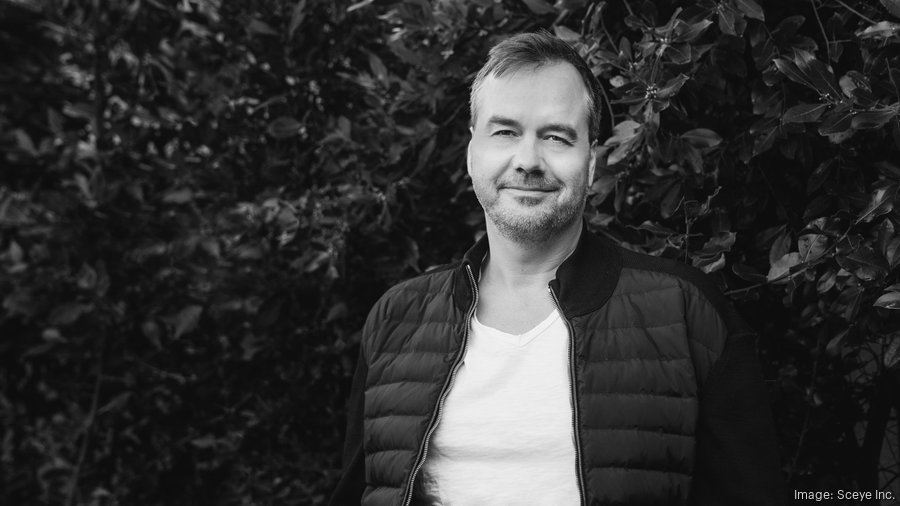
Mikkel Vestergaard's career path with a focus on applying technology to address environmental and humanitarian challenges — has definitely shaped what Sceye is working to create and why. The partnership with SoftBank isn't purely a commercial telecoms investment. The platform's emphasis in disaster prevention, real-time monitoring and connectivity to regions with limited access are a result of a belief system that the stratospheric network should be used for broad-based social functions alongside commercial ones. The way it is framed has likely contributed to making Sceye the ideal partner for a company such as SoftBank that operates in a regulatory as well as public atmosphere where corporate mission is a significant factor.
10. 2026 will be the Year the Stratospheric Tier either Proves Itself or Resets Expectations
The HAPS sector has been promoting commercial deployment for much longer than people will ever. What is unique about that Sceye and SoftBank timetable truly important is that it attaches the specific country, a specific operator, and an exact service milestone to a certain year. If pre-commercial service offerings in Japan launch on schedule and work as promised, 2026 will mark the year when connectivity to the stratosphere changed from promising technology to functioning infrastructure. If it does not, the sector will face harder questions on whether the engineering hurdles are as well-solved with the latest announcements. The partnership has created a line in the sky that's worth keeping an eye on. Check out the best sceye haps payload capacity for blog info including what haps, Sceye Founder, HAPS investment news, Sceye Inc, Stratospheric infrastructure, Station keeping, Sceye News, what haps, sceye aerospace, Stratospheric missions and more.
SoftBank'S Pre-Commercial Haps Services What Can We Expect In 2026?
1. The Pre-Commercial Event is a Specific and meaningful Milestone
The wording is crucial here. Pre-commercial services constitute an entirely distinct stage in the creation of any new communication infrastructure — above experimental demonstration, beyond proofs-of-concept flights campaigns, and then into the territory where real users receive actual service under conditions which provide a rough idea of what commercial deployment will look like. This implies that the platform has been stable, the signal meets quality levels that actual applications rely on, the ground infrastructure is in contact with the antenna of the stratospheric telecom successfully, and the legal approvals are in place to operate in areas of dense population. This is not a marketing milestone. It is an operational one, for which the reason SoftBank is publicly committing to reaching that status within Japan in 2026, sets an objective that the engineering both sides of the partnership need to reach.
2. Japan Is the Right Country for the First Time to Test This
Deciding to choose Japan as the place to launch ultraspheric precommercial services isn't an arbitrary choice. Japan has a collection of traits that make it ideal as a initial deployment site. The country's geography — mountains, terrain with thousands of inhabited islands as well as long and complicated coastlines — creates genuine concerns about coverage, which stratospheric infrastructure is designed to address. Its regulatory environment is sophisticated enough to manage the spectrum and airspace challenges of stratospheric activity. The existing mobile network infrastructure, run by SoftBank is the integration layer that an HAPS platform needs to connect to. And the inhabitants of the region have an ecosystem for devices as well as technological literacy required to use a variety of broadband without having to wait for a period of technology adoption that could hinder the effective adoption.
3. Expect to see the initial coverage focus On Underserved Areas and Strategically Important Areas
Pre-commercial deployments shouldn't try to cover an entire country simultaneously. More likely is the targeted rollout of coverage to areas where the gap in coverage and what a stratospheric internet can provide is largest and where the strategic demand for coverage prioritizing is strongest. In Japan's situation, that means island communities that are currently dependent on expensive and limiting connections to satellites. It also includes mountains and areas of rural where the economics of terrestrial networks have always been insufficiently supported by infrastructure, or coastal regions where resilience to disasters is a major national issue due to the risk of typhoon and seismic exposure in Japan. These areas provide the clearest demonstration of stratospheric connectivity's benefits, and the most useful operational data to refine the coverage, capacity, and platform management before broader rollout.
4. The HIBS Standard Is What Makes Device Compatibility Possible
One of the issues that anyone would ask about stratospheric bandwidth would be whether they require specialist receivers or whether it can be utilized with normal devices. This HIBS framework is High-Altitude IMT Base Station — is the standards-based answer to that question. By adhering to IMT standards that power 5G and four-G networks around the world, any stratospheric device operating as a HIBS is compatible with the device and smartphone ecosystem already available in the coverage area. In the case of SoftBank's precommercial services, those who subscribe to the coverage areas should be able to access stratospheric connectivity through their existing devices without needing to purchase additional equipment — an essential condition for any service which will attempt to reach the populace as well as those living in remote areas who need alternatives to connectivity and are not able to invest in specialist equipment.
5. Beamforming will decide how Capacity Is Distributed
A stratospheric network that covers a large area does not automatically provide a uniform amount of useful capacity throughout the entire footprint. What spectrum and signal energy are allocated across the coverage area dependent on beamforming capabilities — the ability of the platform to direct the signal towards the regions where demand for services and users are most concentrated rather than broadcasting all over the vast areas of land that aren't being used. For SoftBank's pre-commercial phase, demonstration that beamforming derived from an ultraspheric broadband antenna can provide commercially viable capacity to certain areas of a vast coverage area will be equally important as demonstrating coverage areas. The wide coverage footprint, with its thin, inadequate capacity makes no sense. Strategic delivery of genuinely usable broadband to specified services proves the viability of the model.
6. 5G Backhaul Applications May Precede Direct-to-Device Services
In some scenarios, the earliest and easiest method to prove the efficacy of stratospheric communications isn't direct to consumer broadband but 5G backhaul – connecting existing ground infrastructure in areas where terrestrial backhaul is inadequate or non-existent. A remote area may have one or two network devices on the ground, but lack the high-capacity connection to the wider network that makes it valuable. A stratospheric-based platform with that backhaul link expands 5G coverage of communities served by ground equipment that is already in place without needing end users to communicate directly with the system. This use case is easier to validate technically, generates evident and quantifiable results, and builds operational confidence in platform performance prior to the more intricate direct-to-device-service layer is added.
7. "Edge of Sceye's Platform in 2025" Sets The Stage for 2026.
The timeline for precommercial services by 2026 depends entirely on what can be expected when Sceye HAPS airship achieves operationally in 2025. Payload performance, station-keeping validation under real weather conditions, energy system behaviour across multiple diurnal cycles and the integration tests needed to ensure it is working with SoftBank's network architecture all need to reach sufficient maturity before commercial service can be offered. Updates on Sceye HAPS airship status until 2025 are, therefore, not merely news items — they provide the best indicators of what the 2020 milestone will be within the timeframe or creating the type tech debts that extends commercial timelines. In 2025, the progress made by engineers is a story about 2026 that's being written ahead of time.
8. Disaster Resilience will be A Capability that is Tested, Not A Claimed One
Japan's vulnerability to disasters means any commercial stratospheric system operating across the country will surely encounter a variety of conditions — such as earthquakes, typhoons and disruptions to infrastructure- that test the platform's resilience and its importance as an emergency communication infrastructure. This is not a limitation of the application context. This is among the essential features. A stratospheric platform that maintains station while providing access to connectivity and observation during large earthquakes or weather event in Japan proves something that not even a small amount of controlled testing can duplicate. The SoftBank Phase prior to commercialization will provide actual evidence on how stratospheric infrastructure functions when terrestrial networks are damaged — exactly the evidence that other potential users in affected countries must examine before making a decision on their own deployments.
9. The Wider HAPS Investment Landscape will react to what Happens in Japan
It is true that the HAPS sector has attracted significant investment from SoftBank and other companies, however more broadly, the telecoms and investment community remains in a watching brief. Large institutional investors, telecoms operators from other nations and government officials who are looking at stratospheric infrastructure for their monitor and coverage needs monitor what is happening in Japan and paying close attention. An efficient pre-commercial deploymentplatforms on station with services operational, or performance metrics meeting thresholds -and will boost investment decisions across the entire sector in ways that regular demonstration flights and partnership announcements can't. However, any significant delays or shortfalls in performance will lead to changes to the timelines of the sector. The Japan deployment is extremely significant over the entire stratospheric communications sector, not only it's Sceye SoftBank partnership specifically.
10. 2026 will show us whether Stratospheric Connectivity Has Crossed the Line
There is a line in the evolution of any disruptive infrastructure technology from the point where it's promising from the one where it's actual. Mobile networks and internet infrastructures have all crossed this limit at certain points -they did not occur when the tech was originally tested but rather when it was initially reliable enough that institutions and individuals began considering its existence more than focusing on its potential. SoftBank's preliminary commercial HAPS platforms in Japan offer the best next-generation candidate for the point when stratospheric connectivity is crossing that line. If the platforms are able to sustain station through Japanese winters, whether the beamforming is able to provide sufficient capacity to island communities, and how they can operate in the conditions Japan typically encounters, will determine if 2026 is known as the year that the stratospheric internet was a real infrastructure or when the timeline was re-set. Check out the recommended Stratospheric infrastructure for website info including Stratospheric broadband, softbank haps pre-commercial services 2026 japan, sceye haps project status, softbank sceye partnership haps, sceye haps softbank japan 2026, high-altitude platform stations definition and characteristics, what is haps, sceye haps softbank partnership details, sceye earth observation, softbank pre-commercial haps services japan 2026 and more.